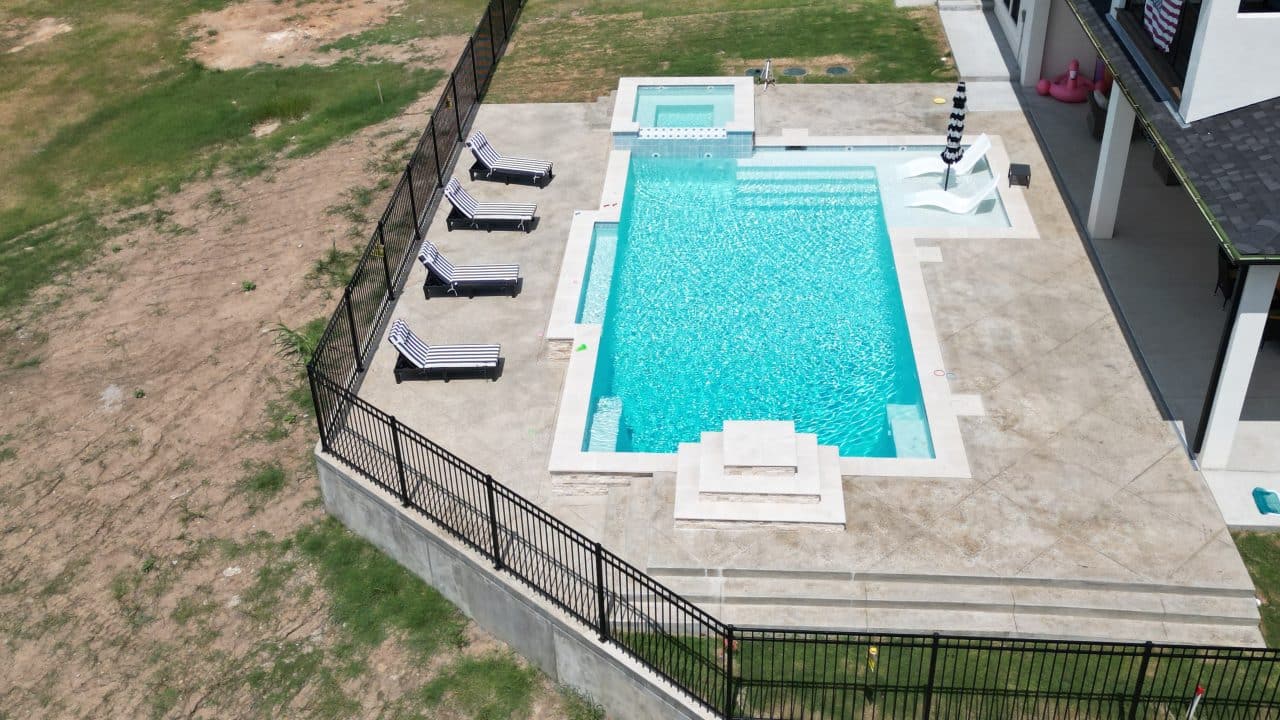
The statistics are sobering. Within five years of completion, nearly 60% of luxury pool projects require significant structural modifications, aesthetic overhauls, or complete redesigns. The culprit isn’t inferior materials or rushed construction—it’s a fundamental misunderstanding of proportion, climate integration, and the delicate relationship between architectural ambition and environmental reality.
In Oklahoma’s distinctive climate zone, where summer temperatures can soar past 100°F and winter storms bring unexpected freezes, the stakes are even higher. Yet most pool designers approach luxury projects with the same template mentality that works in temperate climates, ignoring the specific demands of our region’s weather patterns, soil composition, and architectural vernacular.
The result? Pools that photograph beautifully but live poorly. Installations that require constant maintenance, develop structural issues within years, or simply feel wrong in their environment despite massive budgets and premium finishes.
True luxury in pool design isn’t about adding more features—it’s about understanding the mathematics of beauty, the physics of climate, and the psychology of space. It’s about creating something that feels inevitable, as if the pool had always belonged exactly where it sits.
The Hidden Mathematics of Pool Proportion
Every pool exists within a complex system of visual relationships that the human eye processes unconsciously. The distance from the house to the water’s edge, the ratio of pool length to width, the height of raised elements relative to the surrounding grade—these measurements follow principles that have governed architecture for millennia.
The golden ratio, approximately 1:1.618, appears throughout nature and classical architecture because it creates proportions that feel inherently balanced to human perception. In pool design, this translates to specific relationships between pool dimensions, deck areas, and vertical elements that create spaces people want to inhabit rather than simply photograph.
Consider the typical luxury pool installation: a massive rectangle centered in the backyard, surrounded by uniform decking, with a spa attached like an architectural afterthought. The proportions are often determined by maximizing swimming area within budget constraints rather than creating harmonious relationships with the surrounding architecture and landscape.
The eye reads this arrangement as unresolved. The pool feels simultaneously too large and too small—too large for intimate gatherings, too small to feel genuinely grand. The uniform deck creates visual weight that competes with the water rather than framing it. The spa appears tacked-on rather than integrated into the overall composition.
Proportional design begins with understanding the pool as part of a larger architectural statement. The primary pool should relate to the house’s main mass, while secondary elements like spas, raised planters, or water features should relate to architectural details like wings, porches, or dormers. This creates a hierarchy of forms that guides the eye naturally through the space.
In Oklahoma’s residential architecture, this often means pools that are longer than they are wide, with raised elements that echo the horizontal lines of ranch-style homes or the vertical proportions of colonial facades. The decking should vary in width to create intimate and expansive moments, never competing with the water for visual attention.
The mathematics extend to depth relationships as well. A pool that appears perfectly proportioned at the surface can feel wrong once you enter the water if the depth progression doesn’t match the visual promises made by the design. Shallow areas should feel intentionally shallow—lounge spaces that invite relaxation. Deep areas should provide genuine depth for swimming and diving without feeling like arbitrary cavities.
Oklahoma’s Climate: The Invisible Design Partner
Oklahoma’s continental climate presents unique challenges that separate competent pool designers from exceptional ones. The state experiences temperature swings that can exceed 80 degrees between seasons, with summer heat indices reaching dangerous levels and winter freezes that can last weeks.
Most luxury pool failures in our region stem from treating climate as an engineering problem rather than a design opportunity. The standard approach involves oversized mechanical systems, excessive chemical treatment, and energy-intensive temperature control—solutions that work but at enormous ongoing cost and environmental impact.
Climate-integrated design starts with understanding thermal mass and solar orientation. A pool positioned to capture morning sun and afternoon shade requires dramatically different mechanical systems than one exposed to full-day solar gain. The thermal mass of surrounding materials—natural stone versus concrete pavers, planted areas versus hardscaping—affects both the pool’s temperature stability and its visual integration with the landscape.
Oklahoma’s intense summer heat makes the pool’s relationship with shade critical. Rather than relying solely on umbrellas or pergolas added after construction, sophisticated pool design incorporates existing mature trees or positions new structures to create thermal comfort zones. This might mean an asymmetrical design that flows around a heritage oak, or raised planters that support fast-growing shade trees in strategic locations.
The state’s unpredictable weather patterns also demand flexibility in how spaces function throughout the year. A pool that only works during perfect summer days represents a massive investment with limited utility. But a design that creates compelling outdoor experiences across seasons—through integrated fire features, weatherproof seating areas, or covered spaces for equipment and storage—transforms the pool area into year-round living space.
Winter considerations go beyond basic freeze protection. In regions where pools sit unused for months, the off-season appearance becomes crucial. A pool that looks beautiful when active but becomes an eyesore when covered or empty undermines the entire property’s aesthetic. This requires thinking about winter water levels, equipment visibility, and how safety covers integrate with the overall design.
Oklahoma’s frequent severe weather events add another layer of complexity. Pools must withstand not just temperature extremes but also high winds, hail, and the debris that accompanies major storms. This affects everything from material selection to the positioning of loose elements like outdoor furniture and decorative features.
The most successful luxury pools in our region embrace these climate challenges as design opportunities. Raised spas that extend the swimming season into cooler months. Integrated fire features that make the space compelling during winter evenings. Natural stone that weathers beautifully rather than showing every mark. These elements don’t fight the climate—they work with it to create pools that improve with age rather than degrading from environmental stress.
The Psychology of Luxury: Why Excess Backfires
The luxury pool market often conflates complexity with sophistication, leading to designs that overwhelm rather than elevate the experience. This psychological miscalculation explains why many high-budget pools fail to deliver the satisfaction clients expected from their investment.
True luxury creates emotional resonance through restraint and intentionality. A pool should evoke feelings of calm, beauty, and timeless elegance—emotions that are fragile and easily disrupted by visual chaos or functional confusion. When every element competes for attention, the result is sensory fatigue rather than the restorative experience that draws people to water.
The psychology of space perception reveals why successful luxury pools often appear deceptively simple. The human brain processes environments more effectively when they follow clear hierarchies and logical relationships. A pool design with one dominant element, supported by carefully chosen secondary features, allows the mind to rest and appreciate the beauty of each component.
This principle applies particularly to color palettes and material selections. Oklahoma’s natural landscape provides a sophisticated backdrop of warm stones, native vegetation, and expansive skies. Pools that work with this existing palette feel settled and appropriate, while those that introduce jarring contrasts or excessive variety create visual tension that never resolves.
The relationship between pool and house requires similar psychological sensitivity. The pool area should feel like an extension of the home’s interior rather than a separate destination. This doesn’t mean matching materials exactly, but rather creating transition zones that help the eye and mind move comfortably between indoor and outdoor spaces.
Lighting design often reveals the difference between genuine luxury and mere expense. Overlighting—the tendency to illuminate every surface and feature—destroys the mystery and romance that make evening pool experiences memorable. Sophisticated lighting creates pools of illumination separated by areas of relative darkness, drawing attention to key features while allowing others to recede gracefully.
The sounds of a luxury pool environment deserve equal attention. Multiple water features, each producing different acoustic signatures, can create chaos rather than the peaceful water sounds that make pools psychologically restorative. A single, well-designed fountain or spillway often provides more auditory pleasure than multiple competing elements.
Storage and equipment integration represent another common psychological failure point. Nothing destroys the luxury experience faster than visible reminders of maintenance requirements or the mechanical systems that keep the pool functioning. Truly luxurious pools hide their operational complexity behind seamless design integration, allowing users to focus entirely on enjoyment rather than utility.
Material Selection: Where Beauty Meets Durability
Oklahoma’s climate demands materials that can withstand extreme temperature variations, intense UV exposure, and frequent severe weather while maintaining their aesthetic appeal over decades. The luxury pool market often prioritizes immediate visual impact over long-term performance, leading to selections that photograph beautifully but age poorly.
Natural stone represents the gold standard for luxury pool environments, but not all stone performs equally in our climate. Oklahoma’s native limestone and sandstone offer both aesthetic appropriateness and proven durability, having evolved in precisely the conditions they’ll face around your pool. These materials develop character over time rather than showing wear, and their thermal properties help moderate temperature extremes.
Imported stones require more careful consideration. While exotic granites and marbles can create stunning visual effects, their thermal expansion rates and freeze-thaw resistance may not match our climate demands. Some imported materials that perform beautifully in Mediterranean climates fail catastrophically during Oklahoma’s winter freeze cycles.
The pool interior finish selection affects both longevity and daily enjoyment. Traditional plaster finishes, while economical, require resurfacing every 7-10 years and can develop staining and texture issues that compromise the luxury experience. Premium aggregate finishes like pebble or glass bead surfaces provide superior durability and more sophisticated visual depth, justifying their higher initial cost through extended lifespan and reduced maintenance requirements.
Coping material selection influences both the pool’s visual integration and its practical performance. The coping edge receives the most stress from water exposure, freeze-thaw cycles, and physical use. Materials that appear similar when new can age very differently. Cast concrete coping offers design flexibility but may develop hairline cracks over time. Natural stone coping provides superior longevity but requires careful attention to slip resistance and thermal properties.
Decking material choices affect the entire pool environment’s comfort and functionality. In Oklahoma’s intense summer heat, surface temperature becomes critical for barefoot use. Light-colored natural stones remain comfortable even during peak temperatures, while dark materials or certain synthetic products can become too hot for safe use. The thermal properties of decking materials also influence the pool’s temperature stability and the surrounding landscape’s microclimate.
Equipment selection demands similar long-term thinking. Premium mechanical systems cost more initially but provide quieter operation, greater energy efficiency, and longer service life. In luxury installations, equipment noise can destroy the serene atmosphere regardless of how beautiful the visual design. Variable-speed pumps, advanced filtration systems, and sophisticated automation allow the pool to function efficiently without constant attention or intrusive mechanical sounds.
The integration of technology presents unique challenges in luxury pool environments. While smart controls, automated chemistry management, and app-based monitoring provide genuine convenience benefits, the visible elements of these systems must be carefully integrated to avoid compromising the design’s aesthetic integrity. The most successful luxury pools hide their technological sophistication behind interfaces that feel intuitive and unobtrusive.
Weather resistance extends beyond basic durability to include performance under extreme conditions. Materials and equipment must function reliably during heat waves, ice storms, and severe weather events. This requires understanding not just average conditions but the extreme situations that reveal design weaknesses. A luxury pool that fails during the conditions when it’s most needed represents a fundamental failure of the design process.
At Villa Del Mar Pools, material selection begins with understanding each project’s specific microclimate and usage patterns. We evaluate not just how materials will look when new, but how they’ll age, weather, and perform across decades of Oklahoma seasons. This approach ensures that our luxury pools actually improve with time, developing the patina and character that transform new installations into timeless landscape features.
Integration with Architecture: Creating Seamless Transitions
The most common failure in luxury pool design is treating the pool as a landscape element rather than an architectural one. Successful luxury pools exist in continuous dialogue with the house, creating seamless transitions between interior and exterior spaces that make the entire property feel more cohesive and valuable.
This integration begins during the design phase with careful analysis of the home’s architectural language. A mid-century modern home demands different pool proportions and materials than a traditional colonial or contemporary farmhouse. The pool should echo the house’s geometric principles, material palette, and proportional relationships while adapting these elements to the specific requirements of water features and outdoor living.
Sight lines from interior spaces determine much of the pool’s visual impact. The view from the kitchen window, master bedroom, or main living areas should frame the pool as a carefully composed landscape painting rather than an afterthought visible through coincidental openings. This often requires adjusting pool positioning, elevation, or surrounding landscape elements to optimize these critical viewing angles.
Elevation changes between house and pool create opportunities for sophisticated design solutions. Rather than simply bridging level differences with uniform decking, thoughtful design uses terracing, retaining walls, and planted areas to create a sequence of outdoor rooms that gradually transition from architecture to landscape. These elevation changes also provide opportunities for integrated seating, planters, and water features that feel purposeful rather than arbitrary.
Material transitions require equal care. The connection between house materials and pool area finishes should feel intentional and sophisticated rather than abrupt or jarring. This might involve carrying interior flooring materials onto covered outdoor areas, using complementary but distinct materials for pool decking, and introducing landscape elements that bridge between architectural and natural materials.
Rooflines and overhangs create microclimates that affect both pool positioning and surrounding landscape design. Areas protected by roof overhangs remain more comfortable during intense weather and provide opportunities for outdoor furniture, equipment housing, or transition spaces between interior and exterior. Understanding these protected zones allows designers to create more nuanced outdoor living environments.
Window and door relationships with pool areas affect both privacy and functionality. Pools positioned too close to bedroom windows can create privacy conflicts, while those located inconveniently relative to kitchen or entertaining areas may see limited use. The most successful luxury pools strengthen the home’s existing circulation patterns rather than competing with them.
Lighting coordination between house and pool creates cohesive evening experiences. Pool lighting should complement the home’s existing exterior lighting rather than creating competing focal points. This often means more subtle pool lighting than many homeowners initially envision, allowing the house architecture to remain the primary evening feature while the pool provides supporting ambiance.
Landscape integration extends the architectural dialogue into the broader property context. Plant selections, hardscape elements, and outdoor structures should create a unified design vocabulary that makes the house, pool, and landscape feel like components of a single, intentional composition. This is particularly important in Oklahoma, where the existing landscape often includes mature trees and established grade relationships that must be respected and incorporated.
The most sophisticated luxury pools feel inevitable—as if they had always existed in their location. Achieving this requires understanding the property’s existing relationships and enhancing them rather than imposing arbitrary new elements. The pool becomes part of the architecture’s conversation with its site rather than a foreign element demanding accommodation.
The Economics of Proportional Design
Luxury pool projects often fail financially because they prioritize initial visual impact over long-term value creation. True luxury represents an investment in enduring beauty and functionality rather than a display of spending capacity. Understanding the economics of proportional design reveals why restrained, climate-appropriate designs often provide superior returns on investment.
Initial construction costs represent only a fraction of a pool’s lifetime expense. Energy consumption, chemical treatment, equipment replacement, and maintenance labor create ongoing costs that can exceed the original construction investment over the pool’s lifespan. Pools designed without considering these operational realities often require expensive modifications or create unsustainable maintenance burdens.
Energy efficiency begins with design decisions made before any equipment is selected. Pool orientation, thermal mass integration, and shade relationships affect heating and cooling requirements more dramatically than premium equipment upgrades. A well-oriented pool with appropriate thermal mass might require 30-40% less energy to maintain comfortable temperatures than a poorly positioned pool with identical mechanical systems.
Equipment sizing represents another area where luxury projects often waste money. Oversized pumps, heaters, and filtration systems consume more energy while providing no performance benefits. Properly proportioned pools allow right-sized equipment that operates more efficiently and lasts longer than oversized alternatives working below their optimal load ranges.
Material selection affects both initial costs and long-term value retention. Premium materials that cost more initially often provide superior lifecycle economics through reduced maintenance requirements and longer replacement intervals. Natural stone coping might cost twice as much as precast concrete initially but provide decades of additional service life with minimal maintenance.
The relationship between pool size and maintenance costs isn’t linear. A pool that’s 20% larger doesn’t require 20% more maintenance—it often requires 40-50% more chemicals, energy, and labor because larger water volumes are more difficult to maintain in proper balance. Appropriately sized pools provide better swimming experiences while dramatically reducing operational costs.
Landscape integration affects property values in ways that extend beyond the pool itself. A pool that enhances the property’s overall aesthetic and functional appeal increases home values more than the pool’s construction cost. But pools that appear poorly integrated or create maintenance burdens for the broader landscape can actually reduce property appeal and market value.
Seasonal utility affects economic performance significantly in Oklahoma’s climate. Pools that provide compelling experiences across extended seasons justify their costs through increased usage. Those that only function during perfect summer weather represent expensive seasonal amenities with limited value creation potential.
Future modification flexibility provides economic insurance against changing needs and preferences. Pools designed with rigid, non-adaptable layouts often require complete reconstruction when family situations or aesthetic preferences evolve. More flexible designs accommodate change through additions or modifications rather than replacement.
The luxury pool market increasingly values authenticity and appropriateness over ostentation. Pools that feel right for their setting and climate maintain their appeal longer than those following temporary trends or displaying excessive complexity. This market evolution favors thoughtful, proportional designs that age gracefully rather than demanding constant updates to maintain their luxury status.
At Villa Del Mar Pools, we approach each project as a long-term investment in our clients’ lifestyle and property value. Our design process considers not just initial construction costs but lifetime ownership economics, ensuring that our luxury pools provide genuine value creation rather than expensive maintenance obligations.
Creating Timeless Appeal in a Trend-Driven Market
The luxury market’s obsession with trending features creates pools that feel dated within years of completion. Social media amplifies this problem, showcasing dramatic installations that photograph well but ignore the principles of timeless design. Understanding how to create enduring appeal while accommodating contemporary lifestyle needs separates truly luxury installations from expensive trend-following.
Timeless design principles remain constant across changing style preferences. Proportion, material authenticity, and integration with natural surroundings create appeal that outlasts specific aesthetic trends. A pool with correct proportions and appropriate materials can accommodate changing furniture, lighting, and landscape elements without requiring fundamental redesign.
Water features represent a common area where trend-following creates problems. Elaborate grottos, multi-level waterfalls, and complex fountain systems may align with current preferences but often age poorly as maintenance requirements become burdensome and aesthetic preferences evolve. Simple, well-proportioned water features provide enduring sensory pleasure without the complications that make complex installations feel outdated.
Technology integration requires balancing current capabilities with long-term adaptability. Smart pool systems, automated controls, and advanced lighting provide genuine benefits, but the visible interfaces and control elements should be designed for easy updating as technology evolves. Pools that integrate technology infrastructure without making it central to the aesthetic remain relevant longer.
Material trends cycle predictably, but natural materials provide consistent appeal across changing preferences. While specific stone selections or finish details might vary with contemporary tastes, natural stone, properly proportioned spaces, and quality craftsmanship never go out of style. Synthetic materials and highly engineered finishes may offer short-term advantages but risk appearing dated as newer alternatives emerge.
Color palettes affect long-term appeal significantly. Neutral color schemes based on natural material tones provide backgrounds that accommodate changing accent colors and furniture selections. Bold color statements in permanent elements like tile or painted surfaces can quickly feel dated as preferences evolve.
Furnishing and accessory selections allow pools to stay current without fundamental design changes. A timeless pool design provides an appropriate backdrop for evolving furniture, lighting, and decorative elements. This approach allows homeowners to refresh their pool environment’s appearance through accessories rather than construction modifications.
Plant selections should balance current landscape trends with long-term maintenance and appearance considerations. Native Oklahoma plants provide enduring appropriateness and superior climate performance, while trendy exotic plants may require replacement as maintenance needs become burdensome or as they prove unsuitable for local conditions.
Lighting technology evolves rapidly, making permanent installations of current systems potentially problematic. The most timeless approach involves creating infrastructure for quality lighting while maintaining flexibility for technology updates. LED systems now provide both energy efficiency and longevity, but control systems and color capabilities continue advancing rapidly.
Entertainment features like outdoor kitchens, fire features, and audio systems require careful consideration of long-term relevance. Basic infrastructure for these amenities provides more flexibility than complete built-in installations that may become outdated as preferences and technology change. The most successful luxury pools create opportunities for entertainment enhancements without making them central to the design’s success.
Scale relationships remain critical for timeless appeal. Pools that feel appropriately sized for their settings maintain their visual appeal regardless of changing style preferences. Oversized or undersized pools appear wrong regardless of their surface treatments or accessory selections.
The Villa Del Mar Difference: Disciplined Luxury
The luxury pool market suffers from a fundamental confusion between expense and value, between complexity and sophistication. At Villa Del Mar Pools, we’ve built our reputation on understanding the difference—creating pools that achieve genuine luxury through discipline, proportion, and deep understanding of Oklahoma’s unique conditions.
Our design process begins not with feature selection but with comprehensive site analysis and architectural integration studies. We evaluate soil conditions, drainage patterns, existing vegetation, and microclimate variations to understand each property’s specific opportunities and constraints. This technical foundation ensures that creative decisions serve long-term performance and beauty rather than just immediate visual impact.
Climate integration drives every aspect of our approach. Rather than fighting Oklahoma’s weather patterns, we design pools that embrace seasonal changes and thermal realities. This might mean positioning pools to capture morning sun while avoiding harsh afternoon exposure, or integrating thermal mass elements that moderate temperature extremes naturally. Our mechanical systems complement these passive design strategies rather than compensating for poor environmental planning.
Material selection reflects our commitment to authenticity and longevity. We source natural stones that complement Oklahoma’s geological character while providing proven performance in our climate. Our relationships with premium suppliers ensure access to materials that meet both aesthetic and durability requirements without compromise. When synthetic materials offer genuine advantages, we select them based on long-term performance rather than initial cost savings.
Proportional relationships receive careful attention throughout our design process. We use classical proportion principles adapted to contemporary lifestyle needs, creating pools that feel balanced and timeless rather than following current trends. Our designs establish clear visual hierarchies that guide attention naturally through the space while maintaining overall compositional unity.
Integration with existing architecture shapes every project from initial conceptualization through final details. We analyze each home’s design vocabulary, material palette, and spatial relationships to create pools that enhance rather than compete with the existing architecture. This approach ensures that our pools increase property values while providing extraordinary lifestyle benefits.
Our construction process maintains the same standards of discipline and craftsmanship that guide our design work. We employ experienced craftspeople who understand both traditional techniques and contemporary requirements. Quality control happens at every stage, ensuring that construction execution matches design intent without compromise.
The luxury market increasingly recognizes the value of restraint and appropriateness over ostentation and excess. Our clients choose Villa Del Mar Pools because they understand that true luxury emerges from making excellent decisions about every detail rather than simply spending without limits. They want pools that provide decades of satisfaction rather than just immediate gratification.
Sustainability considerations inform our approach without compromising luxury expectations. Energy-efficient systems, water conservation strategies, and environmentally appropriate material selections align with contemporary values while providing superior long-term performance. Our pools achieve luxury through intelligence rather than waste.
Each Villa Del Mar pool represents a unique solution to specific site conditions, architectural contexts, and client preferences. We don’t build from template designs or standard feature packages. Instead, we create custom solutions that feel inevitable and appropriate for their specific locations and owners.
Our commitment extends beyond project completion to long-term client relationships. We provide ongoing support, maintenance guidance, and seasonal services that protect our clients’ investments while ensuring optimal performance. This comprehensive approach reflects our understanding that luxury pools require knowledgeable stewardship to maintain their beauty and functionality over time.
If you recognize your own vision in this approach—if you value authenticity over trends, proportion over complexity, and timeless beauty over temporary impact—we invite you to explore how Villa Del Mar Pools might bring this philosophy to your own property. Our consultation process begins with understanding your aspirations for outdoor living and architectural integration, ensuring alignment between our capabilities and your vision before any technical discussions begin.
The luxury pool market offers many options, but few providers combine design sophistication with construction expertise and long-term stewardship. Villa Del Mar Pools exists specifically for clients who refuse to compromise between beauty and performance, between immediate satisfaction and enduring value. Your extraordinary outdoor living environment awaits thoughtful development by craftspeople who share your commitment to excellence.