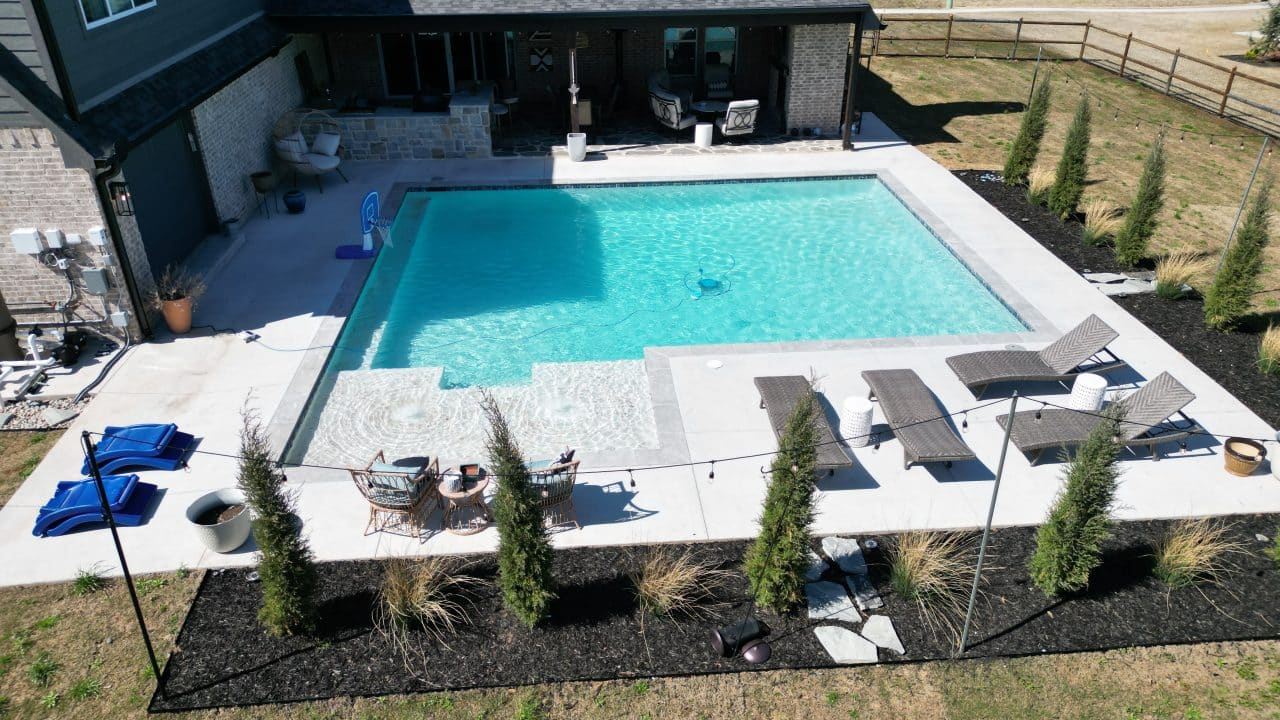
The most expensive pool in Silicon Valley cost $2.3 million to build in 2018. By 2022, its owners had spent another $800,000 on renovations. The culprit wasn’t poor construction or structural failure—it was design choices that aged like milk in the California sun. Infinity edges that looked stunning in photos but created maintenance nightmares. Automated systems so complex they required constant updates. Material combinations that seemed innovative until they started showing wear patterns no one anticipated.
This isn’t a cautionary tale about cutting corners or choosing inexperienced contractors. This is about something far more insidious: the difference between expensive design and valuable design. Between what impresses at the ribbon cutting and what continues to satisfy decades later. Between trends that photograph well and principles that endure.
The pool industry has conditioned homeowners to believe that luxury means more—more features, more technology, more visual drama. But true luxury, the kind that protects substantial investments while delivering lasting satisfaction, is actually about discipline. About understanding which elements enhance a space permanently and which ones will require expensive corrections down the road.
The Psychology of Pool Regret
Wealthy homeowners don’t often admit their mistakes publicly, but the renovation statistics tell the story. According to the National Association of Pool and Spa Professionals, pools valued over $150,000 have a 40% higher likelihood of major modification within their first decade compared to more modestly designed alternatives. The pattern repeats across markets: the most visually aggressive pools become the most expensive to maintain, both aesthetically and mechanically.
The psychology is understandable. When investing significant resources in a backyard transformation, the temptation is to maximize visual impact. To choose elements that feel bold, contemporary, and impressive to guests. The problem emerges slowly, then all at once. What felt cutting-edge begins to feel dated. What seemed sophisticated starts looking complicated. What once impressed now embarrasses.
Consider the fate of the “resort-style” pools that dominated high-end installations in the 2010s. Elaborate rock formations, multiple water features, built-in swim-up bars, and complex lighting systems. These pools photographed beautifully and made strong first impressions. Today, many of their owners are investing heavily to simplify these installations, removing elements that have become maintenance burdens or visual distractions.
The fundamental error lies in mistaking novelty for quality and complexity for sophistication. True luxury design operates on different principles entirely. It prioritizes proportion over drama, integration over statement-making, and longevity over immediate impact. These distinctions aren’t merely philosophical—they translate directly into financial protection for substantial investments.
The Architecture of Timelessness
Timeless pool design isn’t about avoiding contemporary elements or defaulting to traditional forms. It’s about understanding which aspects of design transcend temporary preferences and which ones are inherently tied to passing trends. This understanding requires examining how pools relate to their architectural context, natural environment, and human use patterns over extended periods.
The most enduring pool designs share several characteristics that protect them from premature obsolescence. They demonstrate clear geometric relationships with the home’s architecture, avoiding awkward proportional conflicts that become more obvious over time. They use materials that age gracefully, developing patina rather than simply showing wear. They incorporate mechanical systems that can be updated without requiring structural modifications.
Perhaps most importantly, timeless pools avoid the trap of trying to be everything to everyone. They resist the temptation to combine too many functions or visual themes in a single installation. A pool that attempts to serve as both a lap swimming facility and a naturalistic water feature often succeeds at neither, creating compromises that compound over time.
The principle extends to material selection. Natural stone, properly specified and installed, develops character through weathering and use. Synthetic materials designed to mimic natural ones often reveal their artifice more clearly as they age. Glass tiles that create stunning initial effects may show waterline staining patterns that require expensive refinishing. These aren’t inherent flaws—they’re predictable outcomes that can be avoided through more thoughtful material strategies.
The True Cost of Trend-Chasing
The financial impact of trend-driven pool design extends far beyond the initial construction premium. Pools designed around temporary aesthetic preferences create ongoing costs that compound over their lifetime. These costs aren’t always obvious during the planning phase, when attention focuses naturally on construction budgets rather than long-term implications.
Consider the evolution of pool automation systems over the past decade. Early smartphone-controlled systems seemed revolutionary, justifying significant upfront investments. Many of these systems now struggle with compatibility issues as operating systems update and manufacturer support evolves. Homeowners face choices between living with diminished functionality or investing in complete system replacements.
The pattern repeats across multiple categories. LED lighting systems that promised decades of maintenance-free operation often require entire fixture replacements when individual components fail, because manufacturers discontinue specific models in favor of newer versions. Water features designed around particular pump technologies become expensive to service when those technologies evolve. Pool finishes developed to create unique visual effects may require specialized maintenance products that become difficult to source.
These ongoing costs create a hidden tax on trend-driven design decisions. The pool that costs $200,000 to install but requires $50,000 in updates every five years becomes significantly more expensive than a $250,000 pool that operates efficiently for decades with routine maintenance. The mathematics favor conservative design approaches that prioritize proven systems and materials over innovative alternatives.
The disruption extends beyond financial considerations. Major pool renovations typically require draining and extensive construction work, making the pool unusable for weeks or months. For families who have integrated pool use into their daily routines, this disruption carries costs that don’t appear on contractor invoices but affect quality of life substantially.
Material Wisdom: Choosing for Decades, Not Seasons
Material selection represents perhaps the most critical factor in long-term pool satisfaction. The materials that touch water, support structural loads, and create visual character must perform consistently across decades of use while maintaining their aesthetic appeal. This requirement eliminates many options that seem attractive during initial design phases but reveal limitations over time.
Natural stone, when properly selected and installed, offers unmatched longevity and aging characteristics. Travertine, limestone, and certain granites develop attractive patina through use and weathering, becoming more beautiful rather than simply older. However, these materials require careful specification to ensure appropriate density, finish, and installation methods for pool environments. Not all natural stones perform equally in wet conditions or freeze-thaw cycles.
Pool finishes present particularly complex decisions because they affect both visual character and long-term maintenance requirements. Traditional plaster finishes offer proven performance and reasonable renovation costs when resurfacing becomes necessary. Aggregate finishes provide enhanced durability and visual interest but may require specialized repair techniques. Glass and ceramic tiles create stunning visual effects but demand higher maintenance standards and more expensive renovation processes.
The key insight is understanding how different materials respond to the unique stresses of pool environments over time. Chlorinated water, UV exposure, freeze-thaw cycles, and chemical cleaning processes all affect material performance in ways that aren’t immediately obvious. Materials that appear identical during installation may show dramatically different wear patterns after several years of service.
Successful material strategies also consider regional climate factors and their long-term implications. Pool decking materials that perform beautifully in desert climates may develop issues in humid environments or areas with frequent freeze-thaw cycles. Water features that operate efficiently in temperate zones may require expensive modifications to prevent freeze damage in colder regions.
The Integration Imperative
Outstanding pools don’t exist as isolated features in their landscapes—they function as integrated elements of comprehensive outdoor living environments. This integration affects both immediate visual success and long-term satisfaction as families’ needs and preferences evolve. Pools that relate clearly to their architectural context and landscape setting maintain their relevance even as surrounding elements change.
Integration begins with understanding the home’s architectural character and extending those principles into the pool design. This doesn’t mean literal replication of architectural details, but rather translation of proportional relationships, material palettes, and geometric principles into pool-appropriate forms. A home with strong horizontal lines and natural materials suggests a very different pool approach than one with vertical emphasis and formal detailing.
The principle extends to landscape relationships. Pools that work with existing topography and drainage patterns avoid expensive grading and engineering complications. They take advantage of natural sight lines and privacy opportunities rather than fighting against site conditions. They consider how mature landscaping will affect pool use and maintenance access over time.
Perhaps most importantly, integrated pools anticipate how family use patterns may evolve. Young families often prioritize play features and shallow areas, while empty nesters may value exercise capabilities and easy maintenance. Pools designed with sufficient flexibility to accommodate changing needs avoid premature obsolescence as families mature.
This flexibility doesn’t require complex mechanical systems or convertible features. Instead, it emerges from thoughtful geometric design that supports multiple use patterns simultaneously. Pools with varied depths, clear circulation paths, and logical relationships to indoor and outdoor living spaces naturally adapt to different activities and age groups.
At Villa Del Mar Pools, we’ve observed that the most successful luxury installations are those that feel inevitable within their settings—as if they’ve always belonged. This sense of belonging emerges from careful study of each site’s unique characteristics and translation of those characteristics into pool design principles that will remain relevant for decades.
Mechanical Simplicity as Ultimate Sophistication
The most sophisticated pool systems are often the simplest ones. This paradox reflects a fundamental truth about luxury design: true sophistication lies not in accumulating features but in achieving desired outcomes through elegant, efficient means. Complex mechanical systems may demonstrate engineering prowess, but they also create maintenance demands and failure points that compromise long-term satisfaction.
Consider the evolution of pool heating systems over the past two decades. Early solar installations required complex collector arrays and control systems that demanded regular maintenance and adjustment. Heat pump systems promised efficiency but introduced mechanical complexity and noise considerations. Gas heating offered reliability but created ongoing fuel costs and emissions concerns.
Today’s most successful luxury pools often employ hybrid approaches that combine multiple heating methods while maintaining system simplicity. Natural gas provides rapid heating capability for occasional use, while solar collectors handle base load heating during swimming season. Heat pumps extend shoulder seasons efficiently. The key is designing these systems with clear priorities and avoiding over-engineering that creates unnecessary complexity.
The same principle applies to water circulation and treatment systems. Variable-speed pumps, when properly sized and programmed, provide excellent efficiency while reducing equipment complexity compared to multiple-pump systems. Salt chlorination systems eliminate the handling and storage of chemical chlorine while producing superior water quality. UV and ozone treatment systems can reduce chemical dependency without creating maintenance burdens.
However, the most important mechanical consideration is often system accessibility and serviceability. Pool equipment that requires specialized knowledge or uncommon parts for routine maintenance creates ongoing expense and inconvenience. Systems that can be serviced by qualified local technicians using readily available components provide superior long-term value regardless of their initial sophistication level.
The False Economy of Feature Accumulation
One of the most expensive mistakes in luxury pool design is the assumption that value increases proportionally with feature count. This misconception leads to installations that attempt to incorporate every available option, creating visual chaos and mechanical complexity that ultimately diminishes rather than enhances the pool experience.
The phenomenon is particularly common among homeowners who approach pool design as a single opportunity to create their ultimate backyard environment. The thinking follows logical lines: since this represents a once-in-a-lifetime investment, why not include every feature that might possibly be desired? The result is often pools that excel at nothing while attempting everything.
Consider a recent project consultation involving a proposed installation with built-in spa, swim-up bar, grotto, waterfall, fire features, underwater seating, multiple water jets, colored lighting systems, and automated covers. Each element had individual merit, but their combination created a design that lacked focus and required mechanical systems so complex that routine maintenance resembled industrial facility management.
The alternative approach prioritizes a smaller number of elements and executes them exceptionally well. A beautifully proportioned pool with outstanding water quality, elegant lighting, and seamless integration with its landscape setting provides more lasting satisfaction than a feature-laden installation that compromises each element for the sake of inclusion.
This principle extends to technology integration. Smart pool systems that control every aspect of pool operation from smartphone apps seem appealing until homeowners discover they prefer simple, reliable controls for routine operations. Automated systems that require software updates and troubleshooting procedures transform relaxing pool maintenance into technical support exercises.
The most successful luxury pools achieve their impact through careful editing rather than comprehensive inclusion. They demonstrate restraint in feature selection while delivering exceptional quality in chosen elements. This approach protects investments by avoiding the ongoing costs associated with maintaining numerous complex systems while creating installations that age gracefully rather than becoming maintenance burdens.
Climate Wisdom: Designing for Reality
Regional climate considerations profoundly affect pool design decisions, yet many luxury installations prioritize visual impact over climate appropriateness, creating expensive conflicts between desired aesthetics and environmental realities. Pools that work beautifully in their intended climates but struggle with local conditions often require costly modifications to achieve satisfactory performance.
Desert regions present unique challenges that favor specific design approaches. Intense UV exposure affects material selection, particularly for water surface finishes and deck materials. Extreme temperature swings stress mechanical systems and create expansion joint requirements that affect visual design. Water evaporation rates influence pool sizing and circulation system design. Dust and wind patterns affect equipment placement and landscape integration strategies.
Humid climates create different considerations. Moisture management becomes critical for indoor pool connections and covered outdoor areas. Mold and mildew resistance affects material selection. Storm drainage and flood resistance may require elevation and grading strategies that influence pool placement and design. Hurricane or tornado considerations affect structural requirements for outdoor equipment and landscape features.
Cold climates introduce winterization requirements that affect every aspect of pool design and operation. Freeze protection systems must be integrated into initial designs rather than retrofitted later. Pool depth and circulation patterns must accommodate ice formation potential. Equipment protection and accessibility during snow conditions require careful planning.
The key insight is that climate-appropriate design isn’t a constraint on luxury—it’s a requirement for long-term success. Pools that work with their environmental conditions rather than against them avoid ongoing conflicts that compromise performance and create maintenance expenses. They also tend to age more gracefully because they weren’t fighting environmental factors from the beginning.
The Renovation Spiral: How Small Problems Become Large Expenses
Pool renovations rarely involve single, isolated improvements. Instead, they typically trigger cascading requirements that transform modest update projects into comprehensive reconstructions. Understanding this renovation spiral helps explain why timeless design principles provide such valuable investment protection.
The pattern often begins with a single element that reaches the end of its useful life or falls out of favor aesthetically. Pool surfaces require refinishing every 10-15 years under normal conditions, providing natural renovation triggers. However, surface renovation often reveals opportunities to update other elements simultaneously, since the pool must be drained and construction access is already established.
Tile replacement during surface renovation may reveal that existing waterline treatments look dated compared to contemporary alternatives. Coping stone replacement might seem logical if tile work is already underway. Equipment upgrades become attractive when electrical systems are already being modified for construction access. Landscape modifications appear reasonable since pool areas will require restoration after construction completion.
Each additional element adds cost and complexity while extending project timelines and disruption periods. More significantly, the desire to create visual coherence among new and existing elements often drives more extensive modifications than originally planned. A simple surface refinishing project evolves into comprehensive aesthetic updating that approaches new construction costs.
This spiral effect explains why pools designed with timeless principles provide superior investment protection. When individual elements require updating or replacement, they can be addressed independently without creating visual conflicts that demand comprehensive renovation. Pool designs that rely on specific material combinations or tightly integrated systems leave fewer options for incremental improvements.
The financial implications extend beyond direct renovation costs. Extensive pool reconstruction may trigger permit requirements, property tax reassessments, and insurance considerations that affect ongoing ownership costs. Projects that began as routine maintenance evolve into major capital improvements with corresponding financial and administrative complexities.
The Luxury of Restraint
True luxury in pool design emerges not from maximizing features or visual drama, but from achieving perfect appropriateness within each unique setting. This restraint-based approach to luxury contradicts much of the pool industry’s marketing messaging, but it reflects how the most sophisticated homeowners actually live with their pools over extended periods.
Restraint begins with honest assessment of how pools will actually be used rather than how owners imagine they might be used. Families with young children benefit from pools that prioritize safety and play over adult entertainment features. Empty nesters may value exercise capabilities and easy maintenance over elaborate water features. Frequent entertainers might emphasize comfortable poolside areas over swimming functionality.
The principle extends to visual impact strategies. Pools that achieve their aesthetic effect through proportion, material quality, and landscape integration tend to provide more lasting satisfaction than those relying on dramatic features or complex geometries. Subtle sophistication ages better than bold statements because it doesn’t compete for attention or become tiresome through repeated exposure.
Mechanical restraint proves equally valuable. Pool systems that accomplish their functions through well-proven technologies require less specialized maintenance and offer more service options than cutting-edge alternatives. Equipment that operates quietly and unobtrusively supports relaxation better than systems that announce their presence through noise or visible operation.
This approach to luxury requires confidence and patience that many homeowners struggle to maintain during design and construction phases. The temptation to add “just one more feature” or upgrade to the “premium option” can undermine carefully planned restraint. However, families who successfully maintain design discipline typically report higher long-term satisfaction with their pools.
At Villa Del Mar Pools, our role often involves protecting clients from their own enthusiasm while ensuring their pools exceed their actual rather than imagined needs. This requires deep understanding of how different families use their outdoor spaces and translation of that understanding into design principles that will remain relevant as circumstances change.
The Economics of Excellence
Exceptional pool design represents an investment strategy rather than a consumption decision. This distinction affects every aspect of project planning, from initial budgeting through long-term ownership costs. Pools designed as investments prioritize different elements than those conceived as luxury purchases, ultimately providing superior value even when initial costs exceed typical market levels.
Investment-oriented pool design emphasizes elements that maintain or enhance value over time. Superior structural engineering and construction methods provide decades of trouble-free operation while supporting property values. Premium materials that age gracefully avoid depreciation cycles that affect pools built with cost-minimized components. Timeless design principles protect against aesthetic obsolescence that drives premature renovation decisions.
The financial mathematics favor this approach significantly over typical industry practices. Consider two hypothetical pools: one built for $180,000 using standard materials and construction methods, another built for $250,000 using premium approaches throughout. The first pool might require $40,000 in renovations after eight years and $60,000 after fifteen years. The second pool might operate for twenty years before requiring any major updates.
Over a twenty-year ownership period, the “expensive” pool actually costs less while providing superior performance throughout its life. More importantly, it’s likely to contribute more positively to overall property values and provide better family satisfaction during ownership. The initial premium proves to be the least expensive approach over realistic ownership periods.
This analysis doesn’t account for indirect costs associated with pool problems and renovations. Poor water quality affects family health and pool enjoyment. Equipment failures create inconvenience and emergency repair costs. Aesthetic dissatisfaction motivates expensive updating projects. Mechanical complexity increases routine maintenance costs and reduces service provider options.
Investment-quality pools also provide more flexibility for future owners with different needs and preferences. Pools built around specific lifestyle assumptions or aesthetic trends may require modification to appeal to subsequent buyers. Pools designed with enduring principles typically enhance property marketability regardless of changing ownership.
Craftsmanship as Insurance Policy
The distinction between good and exceptional craftsmanship isn’t always visible during construction, but it becomes apparent through years of use and changing conditions. Superior craftsmanship functions as an insurance policy against premature failure, unexpected repair costs, and aesthetic disappointments that emerge over time. This protection justifies premium investment in construction quality even when differences aren’t immediately obvious.
Structural craftsmanship affects pool longevity most fundamentally. Proper soil preparation, reinforcement placement, and concrete consolidation prevent settling and cracking issues that can require expensive repairs. Attention to expansion joint placement and waterproofing details prevents minor problems from becoming major expenses. Quality control during construction eliminates defects that might not appear for several years.
Finish craftsmanship affects both aesthetics and maintenance requirements throughout pool life. Properly prepared and applied pool surfaces provide smooth, durable finishes that resist staining and wear. Poor surface preparation or application creates rough textures that harbor algae and require more aggressive cleaning. These differences compound over years of use, affecting both appearance and operating costs.
Mechanical system craftsmanship influences reliability and serviceability. Properly planned and installed equipment systems operate efficiently while providing easy maintenance access. Poor installation practices create noise problems, efficiency losses, and service difficulties that affect ongoing satisfaction and costs. Quality electrical work prevents safety hazards and reduces troubleshooting difficulties when problems do occur.
The challenge lies in evaluating craftsmanship quality during contractor selection, since much of the most important work happens below ground or behind equipment panels where it’s not readily visible. This evaluation requires examining previous projects after several years of service, speaking with long-term clients about their experiences, and understanding the technical details that separate superior from merely acceptable construction practices.
Exceptional craftsmanship also provides insurance against changing standards and requirements. Construction that exceeds current code requirements and industry standards is more likely to remain compliant as regulations evolve. Superior installation practices can often accommodate system upgrades and modifications without requiring extensive reconstruction.
Vision Alignment: The Foundation of Lasting Satisfaction
The most expensive pool mistakes often result not from technical failures but from misalignment between client expectations and delivered results. This misalignment typically develops gradually during design and construction phases as communication gaps compound and assumptions remain unexamined. Preventing these gaps requires structured processes that ensure all parties maintain shared understanding throughout project development.
Vision alignment begins with honest exploration of how families actually live and how pool installations might enhance those existing patterns. Many pool projects fail because they attempt to change family behavior rather than supporting established preferences. Pools designed for entertaining families who rarely host gatherings will disappoint. Exercise-focused pools for families who prefer casual recreation miss their mark. Understanding authentic lifestyle patterns guides design decisions toward lasting satisfaction.
The process requires examination of broader property goals beyond immediate pool functionality. Families planning significant landscape improvements, home additions, or major lifestyle changes need pools that will complement rather than conflict with future developments. Pools that work beautifully within current contexts but prevent desired future modifications create expensive conflicts down the road.
Successful vision alignment also addresses maintenance expectations and capabilities. Families who prefer minimal maintenance responsibility need different pool designs than those who enjoy hands-on care and feeding. Complex systems that require frequent attention will frustrate low-maintenance families. Overly simplified systems may disappoint families who want to optimize performance actively.
Budget alignment represents another critical factor that affects long-term satisfaction. Families who stretch financially to achieve desired pool installations may struggle with ongoing maintenance and operational costs. Conversely, families who significantly under-invest in initial construction often face expensive upgrade requirements to achieve satisfactory performance.
At Villa Del Mar Pools, we’ve found that the most successful projects involve extensive discovery processes that explore not just what clients want, but why they want it and how it fits within their broader life patterns. This understanding guides design decisions toward solutions that exceed rather than merely meet expectations while avoiding costly misalignments that emerge after completion.
When we encounter families who are considering significant pool investments, our first priority involves understanding their vision for how these installations will enhance their lives over decades of ownership. This conversation reveals whether proposed designs will actually deliver desired outcomes or whether modifications might better serve long-term satisfaction. These discussions often prevent expensive mistakes while identifying opportunities for designs that provide exceptional rather than merely adequate results.
The pool industry offers countless options for creating impressive backyard installations, but the choices that matter most often involve restraint rather than accumulation. The decision to prioritize proven materials over innovative alternatives. The discipline to edit feature lists ruthlessly. The patience to invest in superior craftsmanship even when results aren’t immediately visible. These choices protect substantial investments while creating outdoor environments that enhance rather than complicate daily life.
If you’re considering a luxury pool installation that will provide decades of satisfaction while protecting your investment, we invite you to explore how timeless design principles might guide your specific project. Villa Del Mar Pools specializes in creating pool environments that feel destined for their settings—installations that age gracefully while supporting evolving family needs through superior design and construction quality.