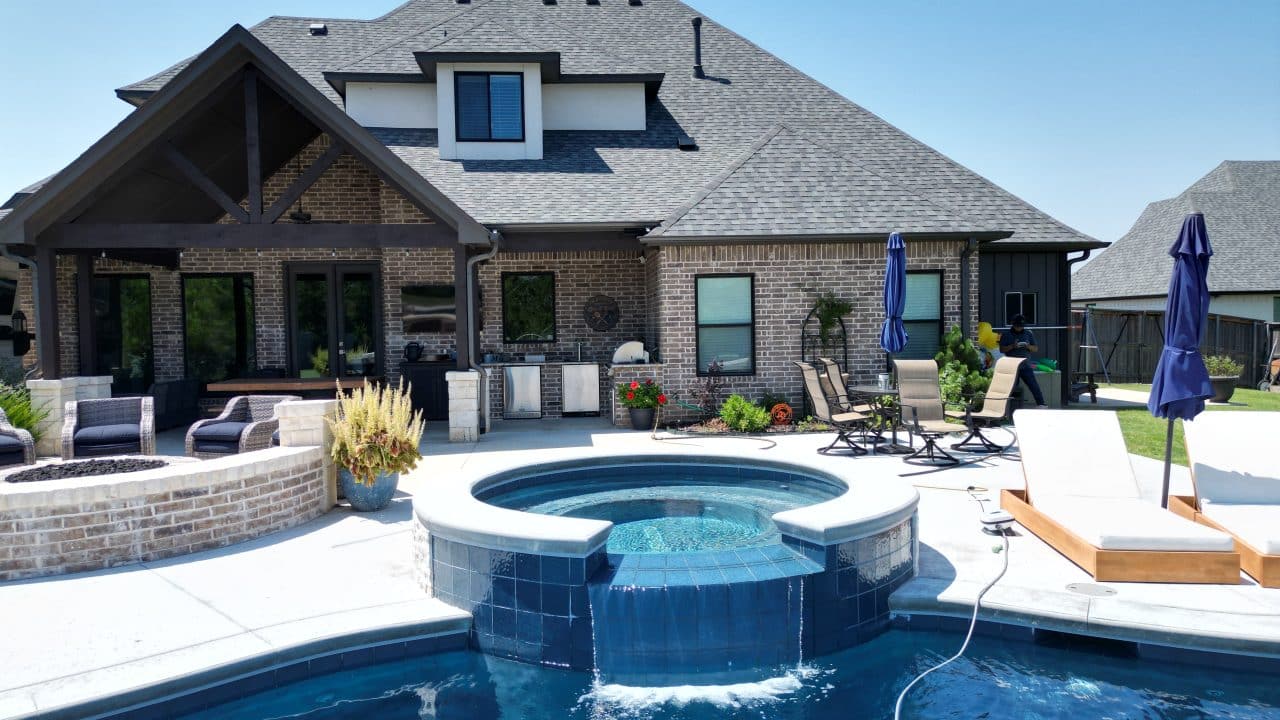
Water has shaped human civilization for millennia, yet too often, when we introduce it to our private spaces, we treat it as an afterthought rather than an architectural element. The most compelling custom pools don’t compete with their surroundings—they complete them. They speak the same language as the home they serve, creating a conversation between built and natural elements that feels inevitable rather than imposed.
This dialogue between water and architecture requires more than aesthetic intuition. It demands understanding how materials age together, how proportions relate across different scales, and how the functional needs of a family can be met without compromising the visual integrity that makes a property feel like home. The difference between a pool that enhances your property value and one that limits it often comes down to this fundamental question: does your pool design honor the architectural story your home is already telling?
Understanding Architectural Dialogue in Outdoor Design
True architectural dialogue occurs when elements respond to each other without losing their individual character. In custom pool design, this means recognizing that your home’s existing structure provides both constraints and opportunities that should guide every design decision.
Consider how a mid-century modern home presents different design imperatives than a Mediterranean revival or a contemporary farmhouse. The mid-century structure likely emphasizes horizontal lines, floor-to-ceiling glass, and the integration of indoor and outdoor spaces. Its pool design should echo these principles—perhaps through a linear swimming lane that parallels the home’s roofline, or through material choices that blur the boundaries between interior and exterior floors.
A Mediterranean revival, by contrast, might call for more organic curves and traditional materials that reference the romance of European courtyards. Here, the dialogue might involve incorporating natural stone coping that matches the home’s exterior masonry, or designing water features that evoke the fountains found in historic estates.
The key lies in translation rather than imitation. Your pool shouldn’t attempt to recreate your home’s architecture in miniature. Instead, it should translate the home’s essential characteristics—its rhythm, materials, proportions, and relationship to light—into the language of water and landscape.
This translation requires understanding the difference between surface-level matching and deeper architectural harmony. Matching might mean using the same stone veneer on both house and pool. Harmony means understanding why that stone was chosen for the house, how it performs in your climate, and how its color and texture will read differently when reflected in water and viewed from various vantage points throughout your outdoor space.
Material Harmony: Creating Cohesive Outdoor Environments
Materials serve as the vocabulary of architectural dialogue, and in custom pool design, they must speak fluently with your home’s existing material palette. But material harmony extends beyond simple coordination—it requires understanding how different materials perform, age, and relate to each other over time.
Natural stone offers perhaps the most versatile foundation for creating material continuity. When your home features limestone, travertine, or sandstone, extending these materials into the pool area creates immediate visual connection. However, the pool environment presents unique challenges. Stone around water requires different surface treatments, drainage considerations, and maintenance approaches than the same stone used on your home’s facade.
The most successful material strategies consider not just appearance, but performance. A limestone that looks stunning on your home’s exterior wall might become slippery and problematic around a pool without proper finishing. Similarly, the same material might read completely differently when it’s horizontal rather than vertical, or when it’s constantly exposed to pool chemicals and changing water levels.
Concrete offers exceptional flexibility for creating custom solutions that bridge the gap between your home’s materials and the pool environment. Through integral coloring, specialized aggregate, and various finishing techniques, concrete can be crafted to complement virtually any architectural style while meeting the specific performance requirements of pool construction.
For homes with brick or masonry elements, consider how these materials can inform the pool’s hardscape without creating maintenance challenges. Perhaps the warm terra cotta tones of your home’s brick can be echoed in the pool’s plaster color, or the geometric patterns of masonry can inspire the design of pool decking or water features.
Metal elements present both opportunities and challenges in pool design. While your home might feature beautiful copper gutters or steel window frames, these materials require careful consideration in the pool environment. However, the warm patina of copper might inspire the color palette for pool finishes, or the clean lines of steel might inform the design of custom water features or architectural elements.
The goal isn’t perfect material matching, but thoughtful material dialogue. Sometimes the most successful approach involves using materials that complement rather than match—a warm sandstone coping that harmonizes with cool limestone house walls, or smooth concrete surfaces that contrast beautifully with rough stone architecture while maintaining compatible color temperatures.
Scale and Proportion: Balancing Pool Size with Home Architecture
The relationship between your pool’s scale and your home’s proportions determines whether the addition feels integrated or imposed. This relationship extends beyond simple size considerations to encompass the visual weight, geometric relationships, and spatial rhythms that make outdoor spaces feel balanced and inviting.
Large homes don’t automatically require large pools, nor do smaller homes necessarily demand modest water features. Instead, successful pool design considers how the water element relates to the home’s various architectural components—its rooflines, window proportions, outdoor living areas, and landscape zones.
A sprawling single-story ranch house might call for a pool design that emphasizes horizontal movement and creates multiple gathering areas, reflecting the home’s emphasis on spreading out rather than reaching up. The pool’s proportions might be relatively long and narrow, creating a visual echo of the home’s extended roofline while providing space for both active swimming and quiet relaxation.
Conversely, a compact two-story home might benefit from a pool design that creates vertical interest through raised spas, retaining walls, or water features. Here, the challenge lies in creating adequate visual impact without overwhelming the available space. The solution often involves designing upward as well as outward, using changes in elevation to create the sense of expansive luxury even within a constrained footprint.
The principle of visual weight becomes crucial when balancing pool design with home architecture. A pool’s visual weight depends not just on its size, but on its shape, depth, material choices, and relationship to surrounding landscape elements. A small pool with dark interior finishes and dramatic water features might carry more visual weight than a much larger pool with light finishes and minimal architectural details.
Understanding your home’s primary view corridors helps determine how pool proportions will read from key vantage points. The pool that looks perfectly scaled when viewed from the kitchen window might appear overwhelming from the master bedroom above, or underwhelming from the living room’s sliding doors. The most successful designs consider multiple viewpoints and create pleasing proportional relationships from each.
Pool geometry should also respond to your home’s architectural rhythm. Homes with strong angular elements might call for pools with clean geometric lines and precise corners. Houses with more organic architectural elements might benefit from pools with gentle curves and naturalistic edges. The key lies in creating geometric relationships that feel intentional rather than coincidental.
Rooflines and Sightlines: Designing for Visual Flow
Your home’s rooflines create powerful directional forces that influence how the eye moves through outdoor spaces. Custom pool design can either work with these forces to create visual harmony or inadvertently fight against them, creating tension and visual confusion.
Hip roofs tend to create centripetal forces that draw attention inward, suggesting pool designs that create central focal points or gathering areas. Gable roofs create strong directional lines that can be echoed or complemented by linear pool elements. Shed roofs and other contemporary forms might call for pool designs that emphasize clean geometric relationships and modern material palettes.
The relationship between rooflines and water becomes particularly important when designing elevated features like spas, water walls, or architectural details. These elements should acknowledge the home’s rooflines without creating awkward height relationships or visual competition. A raised spa that aligns with a home’s primary roof height creates intentional harmony, while one that randomly bisects the roofline creates visual tension.
Sightlines from interior spaces determine how the pool design integrates with daily life. The view from your kitchen sink, master bedroom, or primary living areas should feel carefully composed rather than accidental. This requires considering not just what you see, but how the pool design frames other elements like mature trees, garden areas, or views beyond your property.
Successful pool designs create layered sightlines that reveal different aspects of the design from various vantage points. From the kitchen, you might see the pool’s main swimming area framed by carefully selected landscape elements. From the master suite above, the same pool might reveal a different character, perhaps emphasizing the geometric relationship between water and hardscape, or showcasing the interplay between pool lighting and architectural elements.
The principle of borrowed scenery becomes particularly relevant when designing pools for homes with attractive views or mature landscapes. Rather than creating inward-focused designs that ignore the broader context, the most compelling pools serve as viewing platforms that enhance appreciation of the surrounding environment. Water becomes a reflective surface that brings sky and landscape into conversation with the home’s architecture.
Privacy considerations also influence how pool designs relate to sightlines and rooflines. The same roofline that creates beautiful proportional relationships might also create privacy challenges from neighboring properties or public areas. Successful design solutions address these challenges through strategic landscape placement, architectural screens, or creative grading that provides privacy without compromising the desired architectural relationships.
Style Translation: Adapting Pool Design to Architectural Movements
Each architectural movement carries distinct characteristics that, when properly understood, can inform pool designs that feel authentically connected to their homes. This translation requires moving beyond surface-level styling to understand the philosophical and practical principles that define different architectural approaches.
Mid-century modern architecture emphasized the integration of indoor and outdoor living, horizontal lines, and the honest expression of materials. Pool designs that honor these principles might feature clean geometric forms, seamless connections between pool decking and interior flooring, and water features that celebrate the play of light and shadow. The goal isn’t to create a “mid-century modern pool,” but to create a contemporary pool that shares the mid-century commitment to functional beauty and spatial flow.
Traditional colonial or Georgian homes present different opportunities. These styles emphasize symmetry, proportion, and the hierarchy of spaces. Pool designs might respond with balanced compositions, formal geometric shapes, and landscape elements that create outdoor rooms with distinct characters and purposes. The challenge lies in creating formality that feels inviting rather than institutional, and symmetry that enhances rather than constrains outdoor living.
Mediterranean and Spanish colonial styles often feature courtyards, fountains, and the integration of water as both functional and decorative elements. Pool designs can draw from this tradition while meeting contemporary needs for recreation and entertainment. This might involve incorporating decorative tile work, creating multiple water elements at different scales, or designing spaces that evoke the intimate scale of traditional courtyards while accommodating modern pool equipment and safety requirements.
Contemporary and modern homes offer perhaps the greatest freedom for creative pool design, but also require the most discipline. Without historical precedents to guide material and proportion choices, every design decision must be carefully considered within the context of the home’s specific architectural character. The result should feel inevitable—as if the pool design were always part of the home’s original conception.
Craftsman and arts-and-crafts homes emphasize handmade details, natural materials, and the integration of structures with their landscape settings. Pool designs might respond with natural stone work, custom metalwork details, and landscape integration that feels organic rather than imposed. The challenge lies in creating designs that honor the craftsman tradition of visible craftsmanship while incorporating contemporary pool technology and safety features.
Farmhouse and rural architectural styles present opportunities for pool designs that feel connected to the land while providing contemporary luxury. This might involve incorporating materials that reference agricultural buildings, creating geometric forms that echo the practical simplicity of farm structures, or designing landscape integration that celebrates rather than competes with natural site features.
Water Features as Architectural Elements
Water features transform pools from simple recreational amenities into dynamic architectural elements that can enhance, echo, or counterpoint the design themes established by your home. But effective water feature design requires understanding how moving water behaves as both visual and auditory element within your outdoor environment.
The scale and character of water features should relate to your home’s architectural detail level. Homes with elaborate architectural ornamentation might support water features with complex geometries and multiple elements. Minimalist contemporary homes might call for water features that emphasize the pure qualities of moving water without competing decorative elements.
Fountains and water walls create vertical elements that can balance the horizontal emphasis of most pool designs. When positioned thoughtfully, these features can create focal points that enhance views from interior spaces while providing pleasant background sound that masks traffic noise or neighbor activity. The key lies in understanding how water sounds change with different flow rates, drop heights, and surface materials.
Spillovers and infinity edges create connections between different water levels while emphasizing the sculptural qualities of water itself. These features work particularly well with contemporary homes where clean lines and minimal details allow the water effects to take center stage. However, they require careful engineering and ongoing maintenance to perform effectively over time.
Laminar jets and deck jets add playful elements that can complement homes with more relaxed architectural characters. These features can create dramatic effects during evening entertaining while remaining subtle during daytime use. Their placement should consider both visual impact and practical concerns like wind patterns and maintenance access.
Natural rock water features present opportunities for homes with rustic or traditional architectural characters. However, the challenge lies in creating features that look authentically natural rather than artificially constructed. This requires understanding how water moves in natural environments and selecting stones that appear to belong to your local geological context.
The integration of lighting with water features creates opportunities for dramatic evening effects that can transform the entire character of outdoor spaces. LED technology allows for subtle color changes and programmable effects that can enhance entertaining while remaining sophisticated enough for daily living. The goal should be creating lighting that enhances rather than overwhelms the architectural relationships established during daylight hours.
At Villa Del Mar Pools, we approach water feature design as an extension of your home’s architectural vocabulary. Rather than imposing predetermined styles, we study how your home creates visual interest and rhythm, then translate these principles into water elements that feel integral to the overall design. This approach ensures that water features enhance rather than compete with your home’s architectural character, creating outdoor spaces that feel cohesive and thoughtfully composed.
Landscape Integration and Architectural Context
The relationship between pool design and landscape architecture determines whether your outdoor environment feels like a collection of separate elements or a unified composition that enhances your home’s architectural character. Successful landscape integration requires understanding how plants, hardscape, and water elements can work together to create outdoor spaces that feel both functional and beautiful.
Plant selection should reinforce the architectural themes established by your home while addressing the practical requirements of pool environments. Mediterranean-style homes might benefit from drought-tolerant plants that echo the olive groves and herb gardens of their historical inspirations. Contemporary homes might call for architectural plants with strong geometric forms that complement clean-lined pool designs.
The scale relationships between plant materials and architectural elements require careful consideration. Large-scale homes can support dramatic specimen trees and bold plant masses that would overwhelm smaller structures. Conversely, intimate homes might benefit from gardens that emphasize detail and texture rather than mass and scale.
Hardscape materials provide the framework that connects pools with homes and landscapes. These materials should create visual continuity while addressing practical concerns like drainage, safety, and maintenance. Natural stone, architectural concrete, and specialty pavers each offer different opportunities for creating connections between your home’s architectural character and the pool environment.
Grading and elevation changes can create dramatic effects while solving practical problems like privacy and drainage. Raised planters can provide screening from neighboring properties while creating opportunities for dramatic plant displays. Subtle grade changes can create intimate seating areas or emphasize water features without requiring expensive structural solutions.
Outdoor lighting extends the usable hours of pool areas while creating opportunities to highlight the architectural relationships between home, landscape, and water elements. Path lighting can emphasize the geometric relationships between different hardscape materials. Uplighting can create dramatic silhouettes of specimen plants or architectural features. Pool lighting can transform water from a simple reflective surface into a glowing architectural element.
The challenge lies in creating lighting schemes that enhance rather than overwhelm the architectural relationships established during daylight hours. This requires understanding how different light sources affect material colors and textures, and how lighting can guide movement through outdoor spaces without creating glare or harsh contrasts.
Seasonal considerations affect how landscape elements relate to pool design throughout the year. Deciduous trees might provide welcome shade during summer pool season while allowing warming winter sun to reach outdoor living areas. Evergreen elements can provide year-round structure and privacy while flowering plants can create seasonal interest that keeps outdoor spaces visually engaging even when pools aren’t in active use.
Technical Considerations: Engineering Harmony
The most beautiful pool designs fail if they don’t address the technical realities of construction, maintenance, and long-term performance. Engineering harmony requires understanding how technical systems can be integrated seamlessly with architectural design goals, creating pools that perform flawlessly while maintaining their visual integrity over time.
Equipment placement represents one of the most critical technical decisions affecting architectural integration. Pool equipment must be accessible for maintenance while remaining invisible from primary viewing areas. This often requires creative solutions like underground equipment rooms, decorative screening structures, or strategic landscape placement that provides concealment without compromising function.
The relationship between pool structure and home foundation requires careful engineering analysis, particularly in areas with expansive soils or challenging drainage conditions. Proper design prevents issues like differential settling that could affect both pool performance and home structural integrity. This technical work must happen early in the design process to ensure that engineering requirements don’t compromise aesthetic goals.
Plumbing and electrical integration should support the desired architectural effects while meeting code requirements and facilitating future maintenance. Underground utilities require careful coordination with landscape elements and hardscape installation. Lighting systems must provide desired aesthetic effects while meeting safety requirements and energy efficiency goals.
Water chemistry and filtration systems have evolved significantly in recent years, offering opportunities for more environmentally responsible pool operation while reducing maintenance requirements. Salt water systems, UV sanitization, and advanced filtration technologies can reduce chemical usage while maintaining water quality that supports both health and aesthetic goals.
Automation systems allow pool owners to maintain optimal water conditions and operate features like lighting and water effects with minimal daily involvement. However, these systems must be selected and programmed to support the long-term architectural goals of the project rather than simply providing the most features possible.
Climate considerations affect both design and technical system selection. Areas with freezing temperatures require different plumbing and equipment strategies than year-round swimming climates. Wind patterns affect both comfort and maintenance requirements. Sun exposure influences plant selection, material choices, and cooling requirements.
Drainage design affects both the immediate pool area and broader site conditions. Proper drainage prevents water damage to structures while ensuring that pool areas remain functional during rain events. This technical work often provides opportunities for creative design elements like decorative drainage features or landscape elements that serve both aesthetic and functional purposes.
Future-Proofing Your Pool Design Investment
Thoughtful pool design considers not just immediate needs, but how outdoor living requirements might evolve over time. Future-proofing requires understanding both changing family dynamics and evolving technology while creating designs flexible enough to accommodate modifications without compromising architectural integrity.
Family lifecycle changes affect pool usage patterns in predictable ways. Young families might prioritize safety features and active recreation areas. Empty nesters might emphasize relaxation and entertaining capabilities. Understanding these potential changes during initial design allows for modifications that feel natural rather than forced.
Technology evolution affects both pool equipment and integration with home systems. Smart home integration, energy management systems, and water conservation technologies continue developing rapidly. Pool designs should accommodate these improvements without requiring major reconstruction or compromising established aesthetic relationships.
Property value considerations require understanding how pool designs affect both immediate marketability and long-term property appreciation. Designs that feel overly personalized or trendy might limit future buyer appeal. Conversely, designs that successfully integrate with home architecture while providing flexible functionality tend to enhance property value over time.
Maintenance evolution affects long-term ownership satisfaction. Material and equipment choices should consider not just initial appearance and performance, but how they will look and function after years of use and regular maintenance. The most successful designs balance aesthetic goals with realistic maintenance expectations.
Regulatory changes might affect pool safety requirements, environmental standards, or building codes over time. Designs should accommodate likely future requirements without compromising current functionality or aesthetic goals. This might involve providing space for additional safety equipment or designing systems that can meet more stringent environmental standards.
Climate change considerations are becoming increasingly relevant for pool design in many regions. Designs should consider how changing precipitation patterns, temperature extremes, and water availability might affect pool operation and landscape sustainability over time.
Villa Del Mar Pools approaches every project with an understanding that today’s design decisions will affect decades of future enjoyment. We create designs that feel timeless rather than trendy, and we select materials and systems that will continue performing beautifully with reasonable maintenance over extended periods. This long-term perspective ensures that your pool investment enhances your property value while providing lasting satisfaction for your family’s evolving needs.
The Investment in Architectural Integration
Creating pools that truly dialogue with existing home architecture requires more than aesthetic sensitivity—it demands technical expertise, construction experience, and a commitment to craftsmanship that extends far beyond basic functionality. This level of integration represents an investment in both immediate satisfaction and long-term property value.
The difference between a pool that enhances your home’s architectural character and one that competes with it often comes down to understanding the subtle relationships between materials, proportions, and spatial flow that make outdoor environments feel cohesive and inviting. These relationships can’t be retrofitted after construction—they must be planned and executed with precision from the project’s beginning.
Working with designers who understand both architectural principles and pool construction realities ensures that aesthetic goals remain achievable within practical constraints. This expertise prevents costly modifications during construction while ensuring that finished projects deliver the architectural harmony that justifies the investment in custom design.
The most successful pool projects begin with thorough analysis of existing site conditions, architectural characteristics, and family lifestyle requirements. This foundation supports design decisions that feel inevitable rather than imposed, creating outdoor environments that enhance daily life while protecting long-term property value.
Your home’s architecture tells a story about materials, proportions, and the relationship between interior and exterior spaces. Custom pool design offers the opportunity to continue that story in ways that feel authentic and intentional. When this dialogue succeeds, the results justify both the initial investment and the ongoing satisfaction of living with outdoor spaces that feel truly integrated with your home’s character.
At Villa Del Mar Pools, we believe that exceptional custom pools begin with understanding the architectural context they’ll inhabit. Our design process starts not with preconceived pool styles, but with careful analysis of your home’s materials, proportions, and spatial relationships. We study how natural light moves through your outdoor spaces, how your family uses different areas throughout the day, and how pool design can enhance rather than compete with the architectural investments you’ve already made. This approach ensures that every custom pool we create feels like a natural extension of your home’s design story—beautiful, functional, and built to enhance your property for decades to come.